

The Story of Mozaika
As a group of people from several congregations of the Church of the Brethren, we came to understand God’s story and plan.
God desires to step into the broken and dark world of our today’s fractured relationships. From both a biblical and sociological perspective, the local church community itself is the best model of God’s renewal.
God decided to bring hope into the world through fragile human beings who trust Him and follow Him with courage and humility. This is our beginning. In 2014, a group of 6 people embraced this divine vision, prayed for it (and thousands of times since), and set to work. Everything we did was, of course, with the support of other Church of the Brethren congregations.
Today, our Mozaika church congregation consists of roughly 65 people including children, gathered in 4 Gospel Communities and 9 DNA groups. Currently in the city of Košice.
TOGETHER WE LOVE GOD, ONE ANOTHER, AND THE CITY OF KOŠICE
Leadership of Mozaika
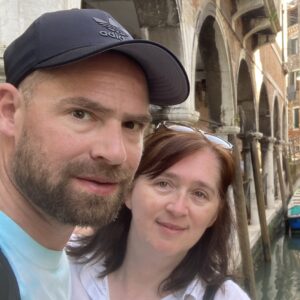
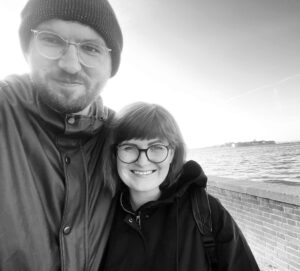
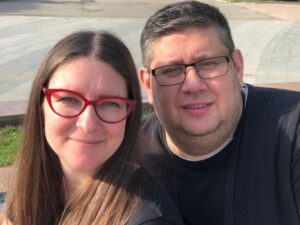
Our team consists of approximately 15 volunteers. The primary leaders are:
Church of the Brethren
The Church of the Brethren is a young shoot on the trunk of the one, holy, catholic, and apostolic Church.
Its roots are grounded in the person and work of Jesus Christ, as revealed in the Scriptures. Life flows to it through centuries of faithful witnesses to this Christ. We therefore joyfully align ourselves with the ancient Christian creeds, the teachings of the pious in the Middle Ages, as well as the heritage of the global and local Reformation, and the principles of the evangelical movement.
Fragments of the Church of the Brethren Story
A hundred years before the Reformation (1517) in present-day Germany (M. Luther) and Switzerland (U. Zwingli and J. Calvin), the reformer Jan Hus was burned at the stake in the Kingdom of Bohemia (July 6, 1415). Like the later reformers in the West, he urged the Church to return to the Scriptures / the Bible.
It was his death that ignited the powerful reformatory effort and zeal of the Hussites. One of them, Petr Chelčický, is considered the founder of the Unity of the Brethren, Unitas Fratrum (1457). “Unity” was the word used at that time to designate the church. The Unity of the Brethren thus became the first “Protestant” church in the world.
Out of the Unity of the Brethren emerged prominent figures of European significance. Its last bishop was John Amos Comenius, the Teacher of Nations. Under heavy Counter-Reformation pressure, however, the Unity of the Brethren was forced into exile. Later, in Saxony, it revived its work and became a church with incredible, worldwide missionary activity. Its motto was: “The Lamb has conquered. Let us follow Him!”
In our territory, under Habsburg rule, new churches could exist only after the Patent of Toleration was issued (1781). In 1880, the first congregation of the Free Reformed Church was established in Prague. After World War I, the church changed its name to the Czecho-Moravian Church of the Brethren, seeking to build upon the legacy of the Unity of the Brethren and its rich history. A historical point of interest is that after the foundation of Czechoslovakia in 1919, František Urbánek, a pastor of the Church of the Brethren, became the spiritual advisor and confessor to the first president, T. G. Masaryk. As the church gradually grew in Slovakia as well (the first congregation in Prešov in 1923, the second in Bratislava in 1926), the need arose to rename the denomination, and it has since used the name “Church of the Brethren” (Cirkev bratská) in both countries.
Leadership of Mozaika
Our team consists of approximately 15 volunteers. The primary leaders are:
Contact Us
Official Details
Zbor Cirkvi bratskej v Košiciach – Mozaika
Humenská 338/7 04011 Košice – Západ district
Legal form: Church organization
SK NACE: according to the Statistical Office of the SR: 94910 Activities of religious organizations
Company ID (IČO): 53252934
Tax ID (DIČ): 2121318595
Fio banka: SK93 8330 0000 0025 0187 2762

instagram.com/mozaikakosice

facebook.com/mozaikakosice